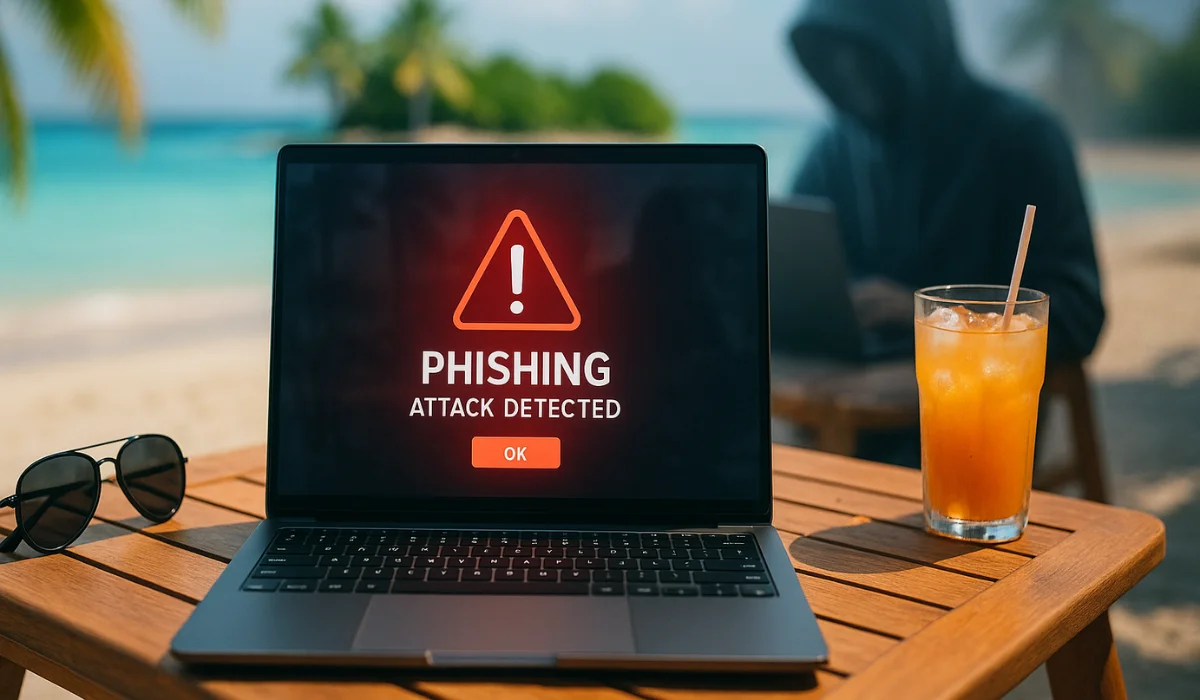
For most people, summer conjures up images of sunny, warm weather, beach vacations, and time off from the daily grind. But for cybersecurity professionals, summer can be a difficult time of year, as it’s prime hunting season for hackers.
Seasonal changes in IT operations and predictable human behaviors lay the groundwork for devastating cybercrime during the summer months. It’s normal to see a spike in malicious activity during this time. For example, one study found that suspicious incidents nearly doubled between May and June 2022.
In this article, we’ll discuss why cyberattacks become more frequent during the summer, specific threats to watch out for, and what you can do to keep your systems safe.
Key takeaways
- When your team is in vacation mode, it presents opportunities for cybercriminals to target your systems. Many teams slack on system maintenance and use unsecured remote wi-fi networks during the summer.
- Phishing attacks, zero-day exploits, and data breaches all spike in the summer, and these attacks are often compounded by human error.
- You can prepare for summer by using tools like EDR and VPNs, proactively patching and backing up your systems, and providing summer refresher training for your employees.
The summer lure: Why cybercriminals see opportunity
There are several reasons why cyberattacks spike during the summer, but it all boils down to changes in our behavior. Here are the two primary summer shifts that lead to a weakened security posture and an increase in attacks.
Operational vulnerability
Many people take vacations during the summer months, which means that IT teams are understaffed. Hackers know this and will launch their attacks during times when companies are likely to be working with limited staff, such as the weeks of Memorial Day or the 4th of July.
When so many IT staff are on vacation, it also makes it difficult for teams to respond to threats in real time. A less vigilant system monitoring allows hackers to cause larger disruptions than they normally would.
Human element exploitation
During the summer, many employees take time off to go on vacation and enjoy time with loved ones. When your team is away from the office, it’s easier for hackers to exploit them, especially with phishing attacks and other social engineering schemes.
Many hackers even conduct seasonal scams themed around holiday promotions or other travel-related themes. For example, during the Paris 2024 summer Olympics, hackers created fake websites to launch ticket scams.
On top of that, remote or hybrid employees often work on the go during the summer, accessing sensitive data from hotels, airports, cafes, and other public hotspots. Public wifi is much easier for hackers to exploit than secure networks at home or the office.
Top 5 IT security threats exploited during the summer
Let’s take a look at the top 5 potential threats to watch for this summer. But first, here’s how cybersecurity risks during summer compare with the rest of the year:
| Threat Type | Summer (May–August) | Non-Summer (September–April) |
|---|---|---|
| Phishing Attacks | High spike—holiday/travel-themed scams | Steady, often less targeted |
| Public Wi-Fi Exploits | Increased use, especially by vacationers | Less common due to more office work |
| Staff Availability | Lower, more vacations, slower responses | Higher—full teams available |
| Device Security | More personal devices/USB use | Mostly secured work devices |
| Patch & Maintenance Gaps | Common delays due to vacation schedules | Regular schedules are typically maintained |
| Infrastructure Risk | Heat-related outages, power fluctuations | Stable climate, fewer physical threats |
| Incident Response Time | Slower, reduced monitoring | Faster, teams are fully staffed |
1. Hyper-targeted phishing and social engineering campaigns
Phishing scams are a leading cause of data breaches all year round, but they are particularly prominent during the summer months. In May 2025, internet users registered 39,000 new web domains related to holidays or vacations, and 1 in 21 of those were flagged as suspicious, indicating that they could be used in upcoming phishing campaigns.
How it works: During the summer, cybercriminals will craft believable email campaigns mimicking airline confirmations, hotel bookings, or package delivery messages, all of which lure victims into responding and sharing sensitive information. For example, hackers recently launched a significant phishing campaign targeting Booking.com partners.
Some cybercriminals even take phishing emails a step further by impersonating your HR department and sending messages about vacation policies.
Email isn’t the only place where cybercriminals conduct phishing attacks. You might also receive these fake messages via text message or on social media. Some hackers even use AI technology to leave believable voicemails.
Potential consequences: Threat actors could steal your login credentials and breach your organization’s network. Many phishing emails also contain malware downloads and can lead to ransomware attacks. Highly targeted business email compromises could expose company bank account information and lead to financial losses.
2. Exploitation of public wi-fi weaknesses
Many people work from public wi-fi networks more often during the summer, which exposes your organization to an increase in summer cyber threats. Many hackers lurk on public wi-fi and use its security weaknesses to intercept sensitive data. 43% of users have had their digital security compromised while using public wi-fi.
How it works: A hacker connects to a public wi-fi network in an airport and spies on other users undetected. They can even launch a man-in-the-middle attack to interfere with corporate communications. Hackers could also set up fake wi-fi networks with similar names to local public wi-fi, trick users into connecting, and then steal their data.
Potential consequences: A hacker steals personal and financial information from an unsuspecting user and conducts identity theft. A hacker could also steal credentials and gain remote access to corporate systems, which they use to launch malware attacks or cause system damage. Finally, hackers could intercept and alter messages sent through public wi-fi to achieve their own goals.
3. Increased risk of data exfiltration via unsecured devices
When preparing to go on vacation, many employees transfer sensitive data from their work computers to their personal devices or save this data to USB drives. 68% of Americans say they work while on vacation. While this makes it easy for teams to stay connected, this also creates cyber risks.
How it works: An employee puts files on a USB drive and uses a public computer to access them while traveling. Someone steals the USB drive from the computer, exposing sensitive client information.
Potential consequences: This could lead to serious data breaches or even a loss of valuable intellectual property. When employees put company data on their devices, it can also lead to regulatory compliance violations, which puts your organization at risk for fines and legal action.
4. Physical threats to IT infrastructure
During the summer, your IT hardware is at increased risk of damage and outages due to the warmer weather.
How it works: When temperatures rise, the cooling system at your data center struggles to keep up, causing your servers to shut down. Increased demands for electricity leave your systems unstable and cause power fluctuations.
Potential consequences: Unexpected outages can lead to data loss, especially if your systems are not regularly backed up to another location. This can also cause costly damage to your hardware. Finally, outages will disrupt your team’s productivity and could potentially damage your relationship with customers.
5. Delayed patching and maintenance exploitation
32% of cyberattacks start with an unpatched vulnerability. Many information security teams wait to apply patches or software updates until after the summer vacation season is over and the entire team is back in the office. System maintenance also tends to be minimal during this time. Hackers take advantage of this window of opportunity to exploit your systems.
How it works: Hackers know that IT teams are understaffed during the summer, so they’ll use this time to exploit outdated software or even launch ransomware attacks. They might even use social engineering strategies to gather information about the company’s summer schedules and time their attacks accordingly.
Potential consequences: Hackers use vulnerabilities to gain unauthorized access to your systems. From there, they can wreak havoc by stealing data, launching further attacks, and damaging your systems.
How to Prevent Cyberattacks This Summer
This summer, take steps to protect your organization from suspicious activity. Here’s what you can do to prevent summer cyberattacks and keep your systems safe.
- Provide pre-summer security awareness training: Before summer starts, host a refresher training session on your company’s security policies and best practices so your entire team is prepared.
- Mandate secure remote access: Require your teams to use virtual private networks (VPNs) when working on public wi-fi networks. Additionally, all accounts should use strong passwords and multi-factor authentication for an extra layer of protection.
- Strengthen endpoint and mobile device management: Use an EDR platform to track threats and manage access to sensitive data across all your devices. This will also give you remote wipe capabilities if your device requires it.
- Prioritize physical IT resilience: Before summer starts, make sure you have updated cooling systems and power surge protection for your servers to prevent any unexpected outages.
- Maintain patch management discipline: It can be tempting to slack off with your patch management and system maintenance during the summer, but you shouldn’t. Instead, proactively develop a vacation coverage plan so that these tasks get taken care of, no matter who’s in the office.
- Test your backup and incident response strategies: Before summer starts, make sure you’ve scheduled regular backups so you won’t lose essential data in the event of an emergency. Additionally, make sure you have a detailed incident response plan in place so you’re prepared for anything.
Partnering for year-round resilience: How Tech Advisors helps
Summer brings unique cybersecurity challenges, but keeping your systems safe should be a year-round goal. At Tech Advisors cybersecurity, we provide managed IT solutions to protect you from evolving threats, no matter the season.
Our services include 24/7 monitoring, patch management, advanced threat protection, and more.
Our cybersecurity experts will consult with you to find security solutions that reflect your unique needs. Contact Tech Advisors today for a comprehensive cybersecurity assessment.