
Many growing businesses are stuck in a cycle of reactive cybersecurity measures. Instead of consistently prioritizing their IT infrastructure and policies, they wait until disaster strikes, then waste time and resources putting out fires.
This reactive approach is stressful for your team and prevents your business from reaching its full potential. It can also put you and your clients at risk for cyberattacks and data breaches.
Instead, consider using a proactive approach to future-proof your business. Investing in IT services and updated technology now can help you save time and money in the long run, so you can focus on what’s most important: your customers. Here’s why proactive IT support is so important for long-term business growth.
Key takeaways
- Many businesses use a reactive IT strategy, which involves responding to problems after they happen rather than trying to prevent them.
- Reactive IT strategies are expensive, time-consuming, and stressful for your team to manage.
- A proactive IT strategy will help your team operate more efficiently and can help you prevent things like system outages and cyberattacks.
- A proactive IT strategy is necessary for business growth and development.
The pitfalls of reactive IT: Why waiting for problems holds you back
When you’re trying to get your business off the ground, building up your IT department and cybersecurity strategy might not be your priority. However, the break-fix model has inherent drawbacks that will limit your organization’s growth.
For example, if you wait until a security incident happens to address the vulnerabilities in your system, you’ll end up facing unexpected downtime or outages regularly. This will make it difficult for you to serve customers and could result in serious damage to your reputation and finances.
Reactive IT support also makes it difficult for you to grow your business and achieve your goals. Instead of focusing your energy on long-term business strategy and innovation, you’ll be spending your time troubleshooting ongoing IT issues just to keep things running.
Many organizations opt for this reactive approach because it seems cheaper on paper than investing in IT support services or hiring experts. However, in the long run, you’re likely to spend more money. It usually costs more to repair issues after they’ve happened than to invest in a stronger IT environment with reliable technology.
Key components of proactive IT support
So you know that a proactive IT strategy is important for business growth, but what does it look like in practice? Here are some of the key components and benefits of proactive IT for growing businesses.
Preventing downtime and ensuring continuity
In order for your business to operate effectively, you need system continuity. Frequent downtime makes it extremely difficult for your team to be productive and achieve their goals. Downtime can happen as a result of issues with your hardware, software, or network, or as a result of security breaches.
A proactive strategy helps prevent downtime by using proactive monitoring to prevent major system failures before they impact operations. Proactive IT management also involves scheduling preventive system maintenance, which can prevent unexpected issues and extend the lifespan of your hardware.
Enabling scalability for future growth
Even if your business is small now, it won’t stay that way forever. A proactive IT strategy ensures that your technology solutions scale with your organization, rather than holding you back from future growth.
A key part of proactive IT is anticipating your future needs and preparing for them. For example, you might invest in cloud data storage and other flexible IT solutions, so you can reconfigure your systems later on without much disruption to your operations.
Fostering innovation and operational efficiency
When your IT environment is stable and well-maintained, your team will have more time and energy to innovate. You’ll be able to explore new technologies, such as automation tools, to streamline workflows and reduce manual tasks.
This focus on efficiency and growth, rather than responding to security issues, will help improve productivity, so you can reach your goals faster. An efficient approach will also help you provide better service for your customers.
Strengthening security posture against evolving threats
Cybersecurity threats are always evolving. A proactive IT strategy helps you stay two steps ahead of threat actors to keep your systems safe by providing real-time alerts and monitoring, allowing teams to respond to threats immediately before they escalate.
For example, proactive IT setups often include regular vulnerability assessments and predictive technology to address potential issues before hackers can exploit them. They also include disaster recovery plans to reduce the damage of a cyberattack.
Regular software updates and patching are also essential to keeping your systems secure. This is because many threat actors will exploit outdated software when launching their attacks. 32% of cyberattacks start with an unpatched vulnerability.
Aligning IT with your long-term business vision
Your IT strategy should be part of your long-term business planning, rather than an afterthought. When setting goals and a roadmap for your teams, consider how IT fits into the broader puzzle.
For example, if you plan on offering a new service for clients, consider what types of technology you’ll need to achieve this goal. Will you need to expand your data storage or invest in machine learning? Will you need to add new security measures to protect sensitive information related to the new service?
Then, factor that technology into your budgeting and strategic planning. This will help prevent potential problems later on and make for a smoother launch.
If you don’t have a full-time IT support team on staff, consider consulting with third-party IT experts to build and implement your strategy. Third-party support can offer a helpful external perspective to support smarter business decisions.
Once you have a robust IT strategy in place, don’t get complacent. Instead, conduct regular strategic IT reviews and cybersecurity audits. This will help you find potential areas for improvement and ensure that your systems are up-to-date.
Why proactive IT is a cost-effective strategy
Proactive IT management involves significant and consistent upfront investment. This can be daunting for organizations operating on a tight budget, but the cost savings typically make it worthwhile in the long run.
Robust, well-maintained IT systems will help you avoid hefty repair fees, but this is just one way that proactive IT can help you save money. Proactive IT strategies help your team operate more productively and bring in more sales.
Proactive IT also prioritizes cybersecurity, which can help you avoid the fines and costly reputational damage associated with data breaches. Compliance standards for data security have gotten stricter in recent years, so even a small breach could result in significant losses.
A key part of a proactive IT strategy for small businesses is finding technologies that align with your budget. Look for flexible solutions that can grow with you and be configured to suit your unique needs.
Future-proof your success with proactive IT support
If you want to grow your business, you’ll need to get out of the endless hamster wheel of reactive IT and switch to a more proactive approach. With 95% of small business owners using at least one technology in their operations, IT support isn’t optional anymore.
Proactivity has benefits for your team, your customers, and your organization as a whole. Your systems will be safer and more efficient, your team will experience less stress, and your customers will get better service and better quality products.
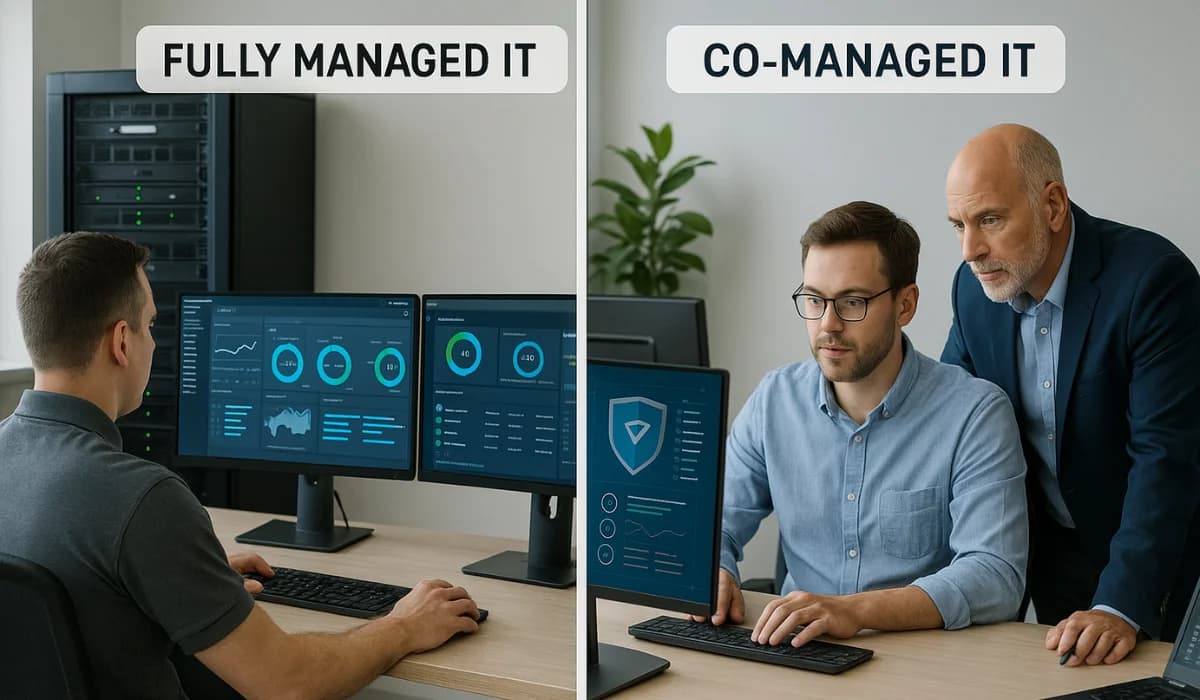
Many small businesses don’t have a full IT team on staff, which can make it difficult to implement a proactive IT strategy. If this is the case for your organization, consider working with a managed IT services provider like Tech Advisors.
A managed services provider is a third-party organization that offers IT services like system monitoring, software updates, help desk support, disaster recovery, and much more. Working with a managed service provider is a cost-effective way to scale your systems without the added cost of full-time IT staff.
If you’re ready to future-proof your IT strategy, get in touch with Tech Advisors today to learn more about our services.